
Research-based comparison · Updated October 6, 2026
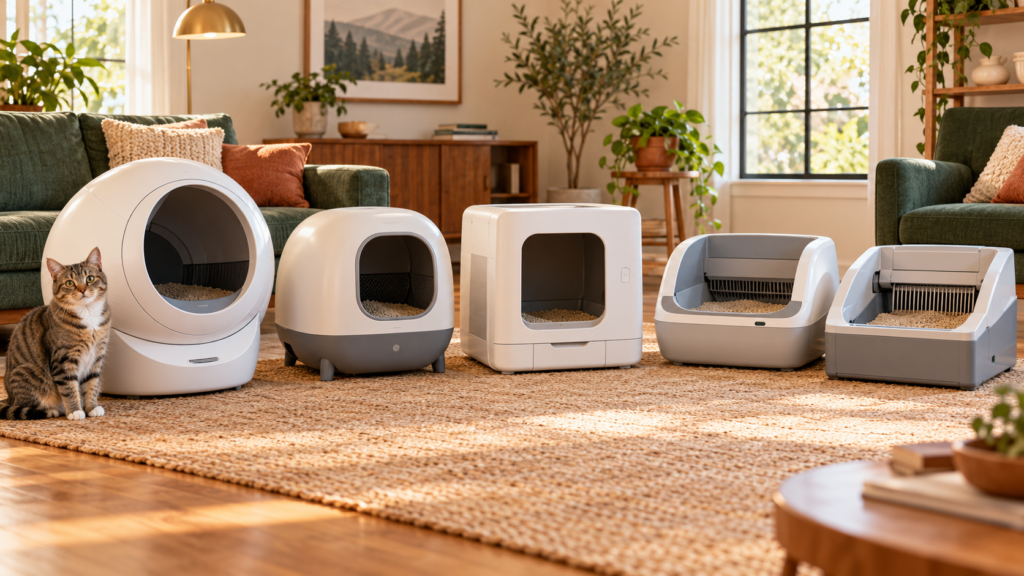
The best automatic litter box is not simply the one with the longest feature list. It is the one your cat can enter comfortably, your litter can work with, and you can realistically keep clean. We compared five current smart models by cat fit, safety limits, daily workload, deep-cleaning burden, app usefulness, and the costs that continue after checkout.
Who this guide is for—and who should wait
This guide is for you if you want to reduce daily scooping, can keep a traditional backup box, and are willing to measure your cat and floor space before choosing a machine.
Wait or stay with a traditional box if you have a kitten below the maker’s minimum weight, a cat currently avoiding the litter box, no reliable caregiver during travel, or no tolerance for drawer emptying and monthly deep cleaning. Automation removes scooping—not ownership.
Quick verdict: which one fits your household?
- For the most complete premium monitoring: Litter-Robot 5 Pro combines a large entry, multi-cat support, dual cameras, and a mature app ecosystem—but advanced camera features may add a subscription, and the unit demands substantial floor space.
- For cats that dislike enclosed boxes: Petlibro Luma offers the most open-feeling design here, a wide entrance, and video-based visit records. It is a poor match for cats over 22 pounds or homes using crystal, pine, grass-seed, or cassava litter.
- For large cats and simple physical access: Neakasa M1 Plus pairs an open top with support for cats up to about 33 pounds. Its high entry can still be a barrier for arthritic or short-legged cats unless you add a stable step.
- For core automation without a camera: PetSafe ScoopFree SmartSpin tracks weight and visits, accepts clumping litter, and has a compact-looking shell. Its 6-liter drawer is smaller than the biggest competitors, so multi-cat homes should expect more frequent emptying than headline estimates suggest.
- For camera-first health context: PETKIT Purobot Max Pro 2 records 1080p video and recognizes multiple cats. Its 22-pound upper limit and 10-inch entry height matter more than its long feature list if you have a very large or mobility-limited cat.
Best default for an unsure buyer: choose an open-top model if acceptance is your biggest concern; choose an enclosed model if litter scatter and visual containment matter more. Keep the old box during the transition, and never use automatic cycling for a kitten below the maker’s minimum weight.
Retail-link disclosure: Fupaw does not currently use an Amazon affiliate tag. The Amazon links in this article are direct, non-affiliate search links, and Fupaw does not earn a commission from them at this time. Availability and model names can change; verify the seller and exact model before buying.
At a glance: five automatic litter boxes compared
| Model | Best fit | Cat weight guidance | Entry / layout | Litter compatibility | Smart features | Main tradeoff |
|---|---|---|---|---|---|---|
| Litter-Robot 5 Pro | Premium multi-cat monitoring | 3–30 lb | Enclosed; 15.75-in square opening; 15.1-in floor-to-entry | Clumping litter; follow maker guidance | Dual cameras, WasteID, weight and visit tracking; 2.4/5 GHz Wi-Fi | Large footprint; some advanced camera features may require Whisker+ |
| Petlibro Luma | Camera monitoring with an open top | 2.2–22 lb; special manual-mode rules for kittens, pregnant or nursing cats | Open top; 17.4-in entrance; included step | Clumping clay, tofu, and mixed litter; not crystal, pine, grass seed, or cassava | Camera, visit and weight data; video AI add-on available; 2.4/5 GHz Wi-Fi | 33-lb unit; hard, level floor required; richer video analysis is subscription-based |
| Neakasa M1 Plus | Large cats that prefer openness | About 2.2–33 lb | Open top; about 13.9-in entry height | Clumping/scoopable litter within particle limits | App, weight and visit records | Entry height may challenge seniors; not for non-clumping or large pellets |
| PetSafe SmartSpin | Straightforward smart automation | Up to 25 lb | Enclosed rotating chamber; about 12 in high overall entrance area | Compatible with litter generally; premium clumping litter recommended | Weight and usage tracking over 2.4 GHz Wi-Fi | 6-L drawer; no camera; “up to two weeks” is usage-dependent |
| PETKIT Purobot Max Pro 2 | Video context and multi-cat identification | 3.3–22 lb | Enclosed; 10.51 × 10.74-in opening; 10.03-in entry height | Clumping clay, tofu, and mixed litter within particle limits | 1080p camera, cat recognition, weight and visit tracking; 2.4/5 GHz Wi-Fi | Smaller opening and 22-lb limit; extended video history requires Care+ |
How to choose the best automatic litter box: four questions
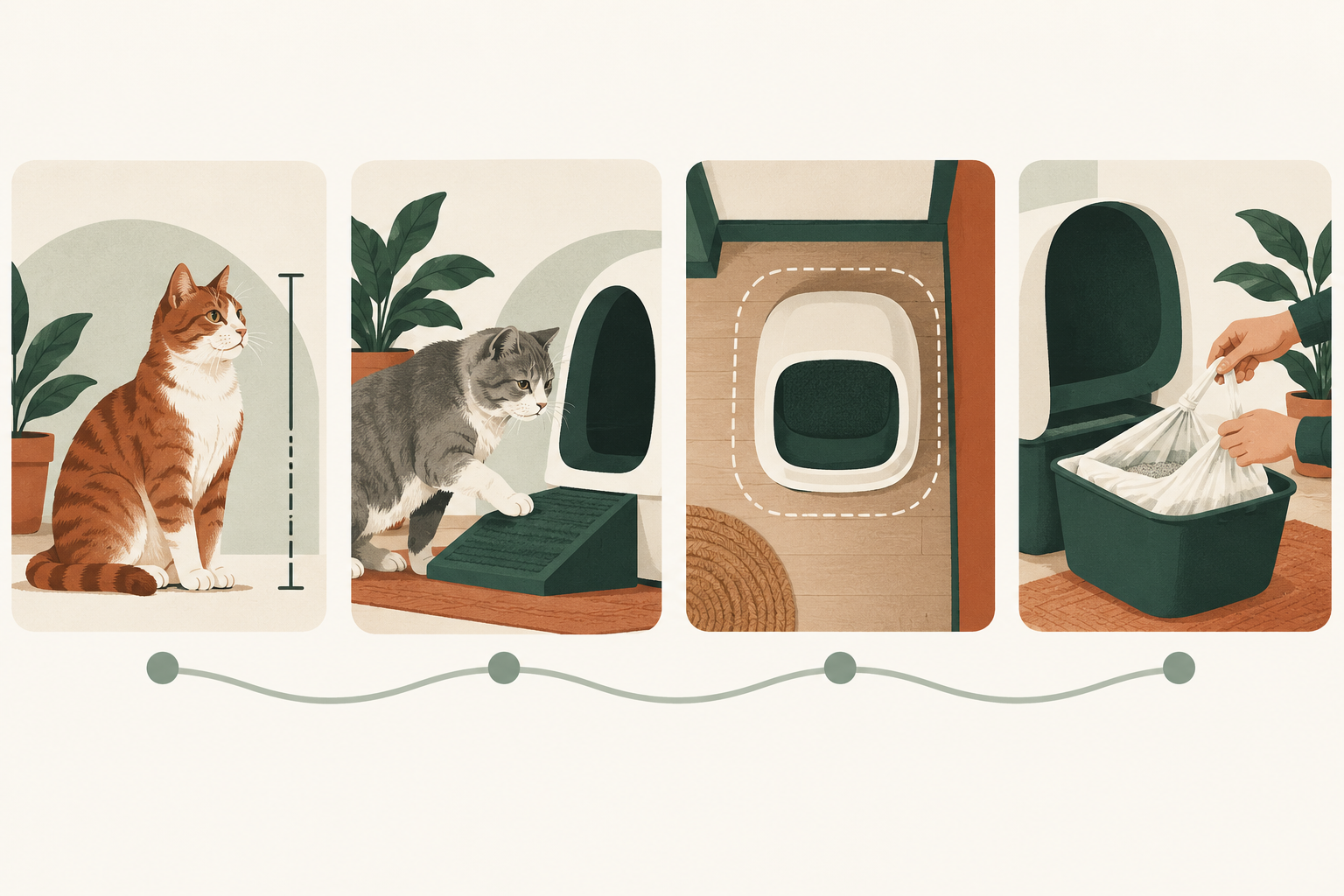
1. Will your cat enter it willingly?
A cat can fit by weight and still reject a box because the opening is cramped, the floor moves, or the entrance is too high. Open-top designs usually give cautious cats more sight lines and room to turn. Enclosed drums contain scatter better and provide privacy, but they ask the cat to enter a cave-like space. Measure shoulder height and body length, not just weight. For a senior, also compare the first step height and whether a ramp can sit securely without blocking sensors.
2. Will your current litter pass through the screen?
Rotating boxes separate clumps through a screen. Particle size, clump strength, and drying time therefore affect waste carryover. Fine clumping clay is the safest starting point for most rotating designs. Tofu and mixed litter work only where the maker explicitly supports their pellet dimensions. Crystal, pine, paper, and non-clumping litter are not universal. If changing litter is likely to trigger avoidance, favor a machine compatible with the litter your cat already accepts.
3. Where will the machine actually live?
Published dimensions exclude the space needed to open a drawer, lift a globe, remove a drum, or stand in front of the unit. Weight sensors usually require a hard, level floor; thick carpet can distort readings. Plan for ventilation, an outlet, stable Wi-Fi, and enough clearance to deep-clean the machine without dragging it through the house. A box that technically fits but cannot be serviced in place becomes a long-term burden.
4. What work is automated—and what work remains?
Automatic means the machine separates clumps. It does not mean maintenance-free. You still add litter, empty the drawer, wipe sensors, clean the screen and interior, inspect seals, wash removable parts, replace deodorizers or liners, and troubleshoot jams. High-peeing cats can expose seams that ordinary use does not. Soft stool can smear inside a globe instead of dropping neatly into the drawer. Budget your attention for the messy week, not the ideal week shown in marketing.
In-depth model analysis
Litter-Robot 5 Pro: best for a premium, data-heavy multi-cat setup
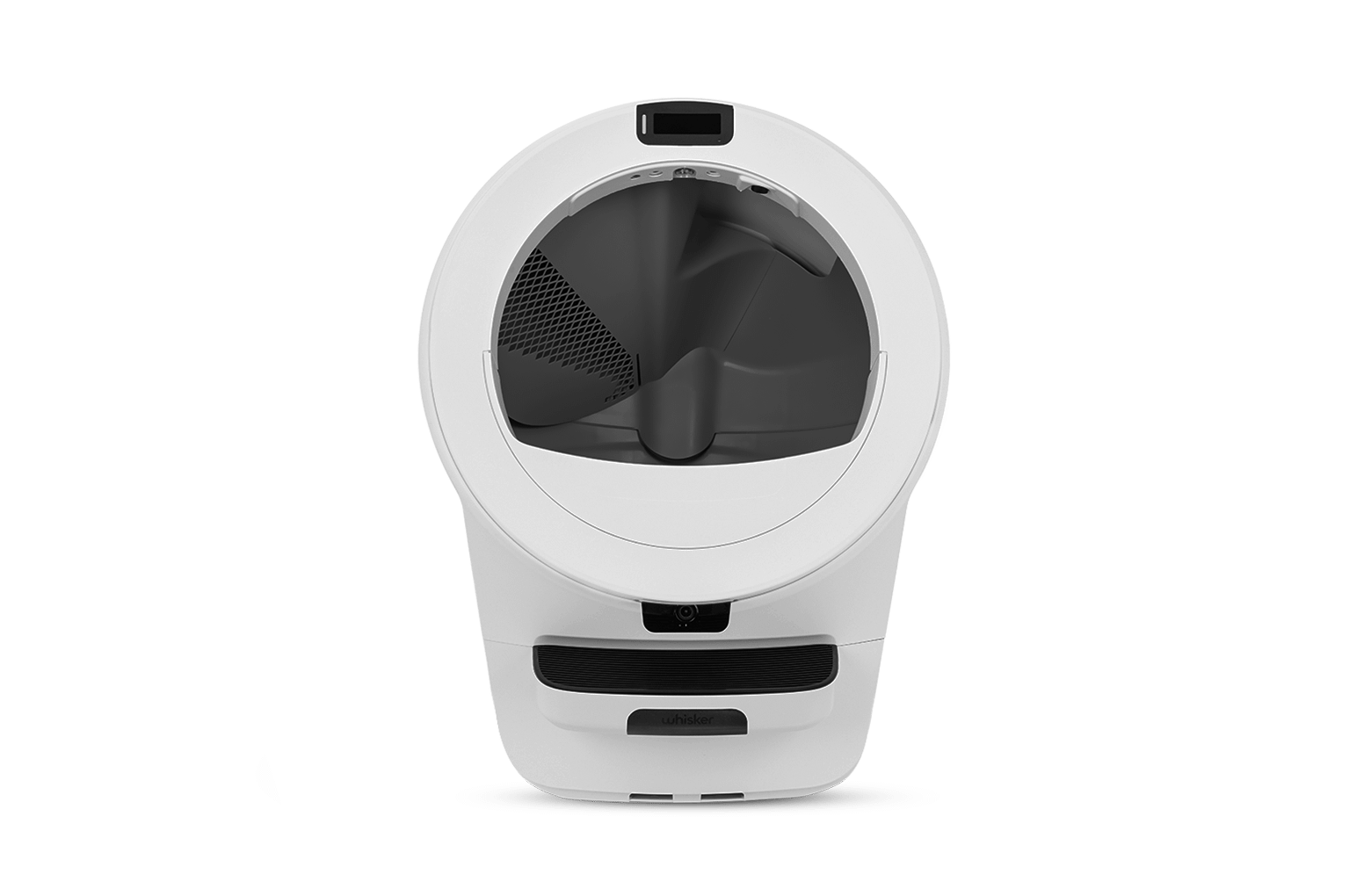
Why it stands out: The 5 Pro combines the broadest cat-weight range in the enclosed group with dual cameras and Whisker’s established app. Manufacturer guidance covers cats from 3 to 30 pounds and up to five cats. The 15.75-inch square entrance is substantially wider than PETKIT’s opening, which can make turning less awkward for a large-framed cat even though the step up is still meaningful.
What the app can and cannot do: Weight and visit history can reveal a change worth paying attention to, but a litter box is not a diagnostic device. Camera-based waste classification can add context; it cannot determine why a cat is straining, urinating more often, or producing abnormal stool. Some advanced camera functions may require a Whisker+ plan, so treat the subscription as part of the ownership decision rather than a surprise after purchase.
- Choose it if: you have multiple cats, want video plus weight/visit history, can accommodate a roughly 22 × 27-inch footprint, and value a long trial period.
- Skip it if: your cat avoids covered boxes, cannot comfortably step about 15 inches without a ramp, or you do not want optional recurring software costs.
- Maintenance reality: the drawer may last “up to” many days for one cat, but multi-cat volume, litter type, and stool consistency shorten that interval. Plan regular globe and screen cleaning.
Petlibro Luma: best for open-top acceptance plus a useful camera view
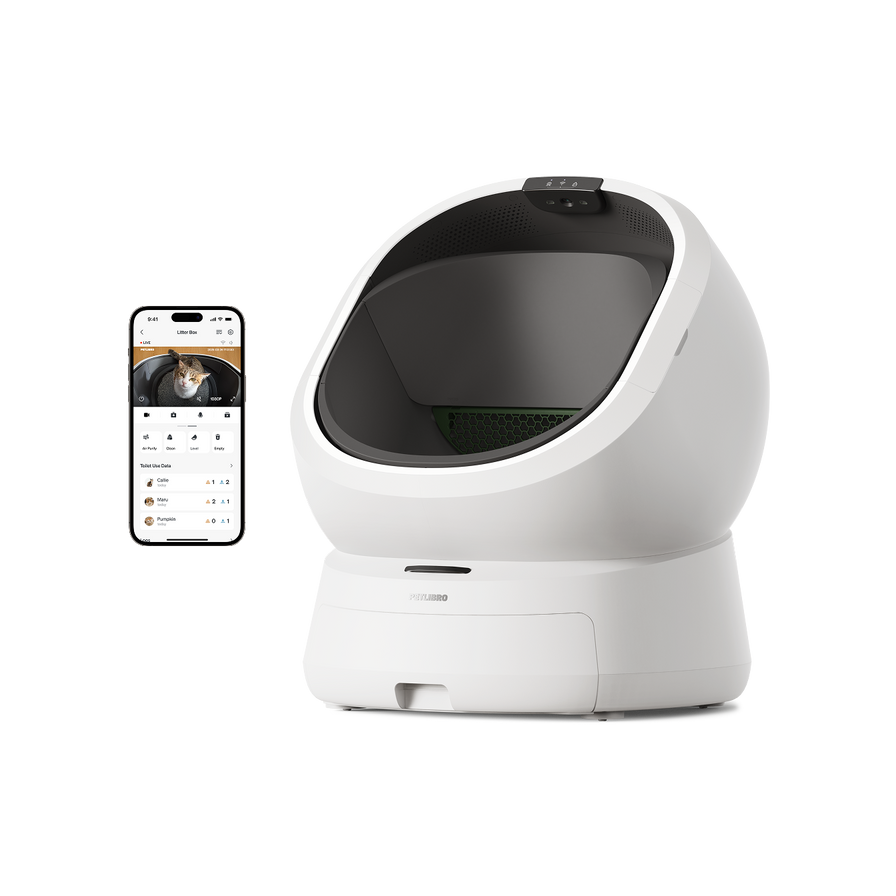
Why it stands out: Luma keeps the top visually open while adding a camera, weight sensing, visit logs, and a large 11-liter waste drawer. Its 17.4-inch entrance is the widest published opening in this comparison. The drum detaches for washing, and the box includes two filters for different compatible litter shapes.
The catch: The unit weighs about 33 pounds, requires a hard, flat floor and four inches of surrounding clearance, and supports adult cats only up to 22 pounds. Live viewing and core visit logs work without a subscription, while AI analysis, recording, and playback require Video Cloud AI. Petlibro also recommends replacing the carbon deodorizer and litter mat about every three months in a single-cat home, adding an ongoing consumable.
- Choose it if: your cat dislikes enclosed spaces, you want video confirmation of who used the box, and your cat falls comfortably inside the weight range.
- Skip it if: you use crystal, pine, grass-seed, cassava, or other unsupported litter; have a cat over 22 pounds; or must place the box on carpet.
- Safety note: for kittens under six months, cats under 2.2 pounds, or pregnant or nursing cats, the manufacturer says to disable auto cleaning and use manual mode.
Neakasa M1 Plus: best for larger cats that want an open top
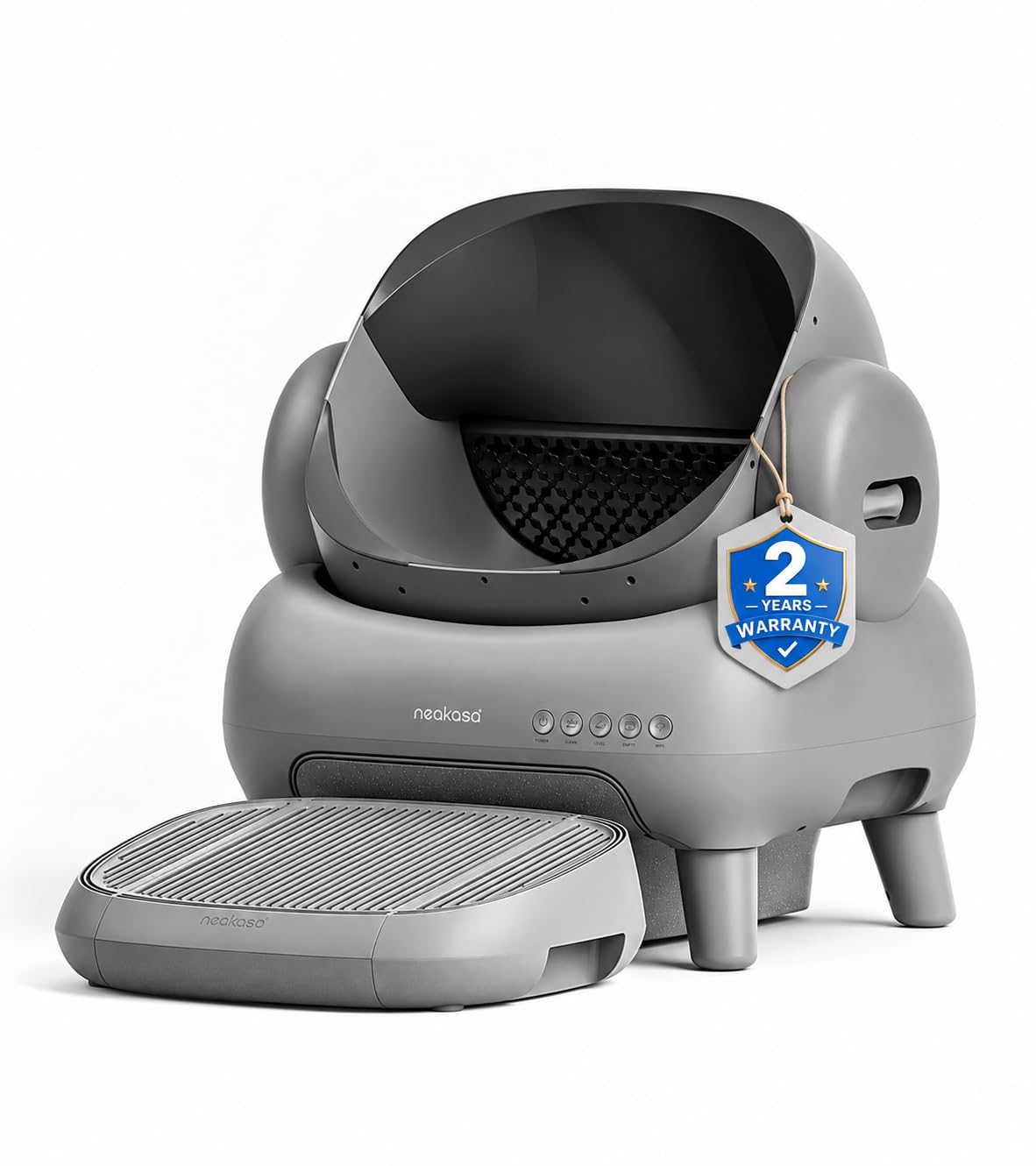
Why it stands out: The M1 Plus combines an open-top drum with published support for cats up to roughly 33 pounds—the most generous upper limit in this group. The 11.23-liter waste bin is also larger than the PetSafe and PETKIT drawers. Six infrared sensor sets, an odor-sealing waste drawer, and app-based weight and visit history make it a strong practical alternative to enclosed premium units.
The catch: “Open top” does not mean “low entry.” At about 13.9 inches, the step may still be difficult for an arthritic cat. Neakasa sells a step, but any accessory should be stable and must not interfere with sensors. The sifting screen also imposes particle limits: non-clumping litter, newspaper litter, and large wood pellets are out.
- Choose it if: your cat is large or long-bodied, resists covered boxes, and uses a compatible clumping litter.
- Skip it if: entry height is a bigger problem than enclosure anxiety, or your preferred litter uses large pellets.
- Maintenance reality: a large bin reduces emptying frequency but does not eliminate odor, liner, or drum cleaning. Inspect the waste seal and any urine-contact seams during deep cleans.
PetSafe ScoopFree SmartSpin: best for core smart functions without a camera
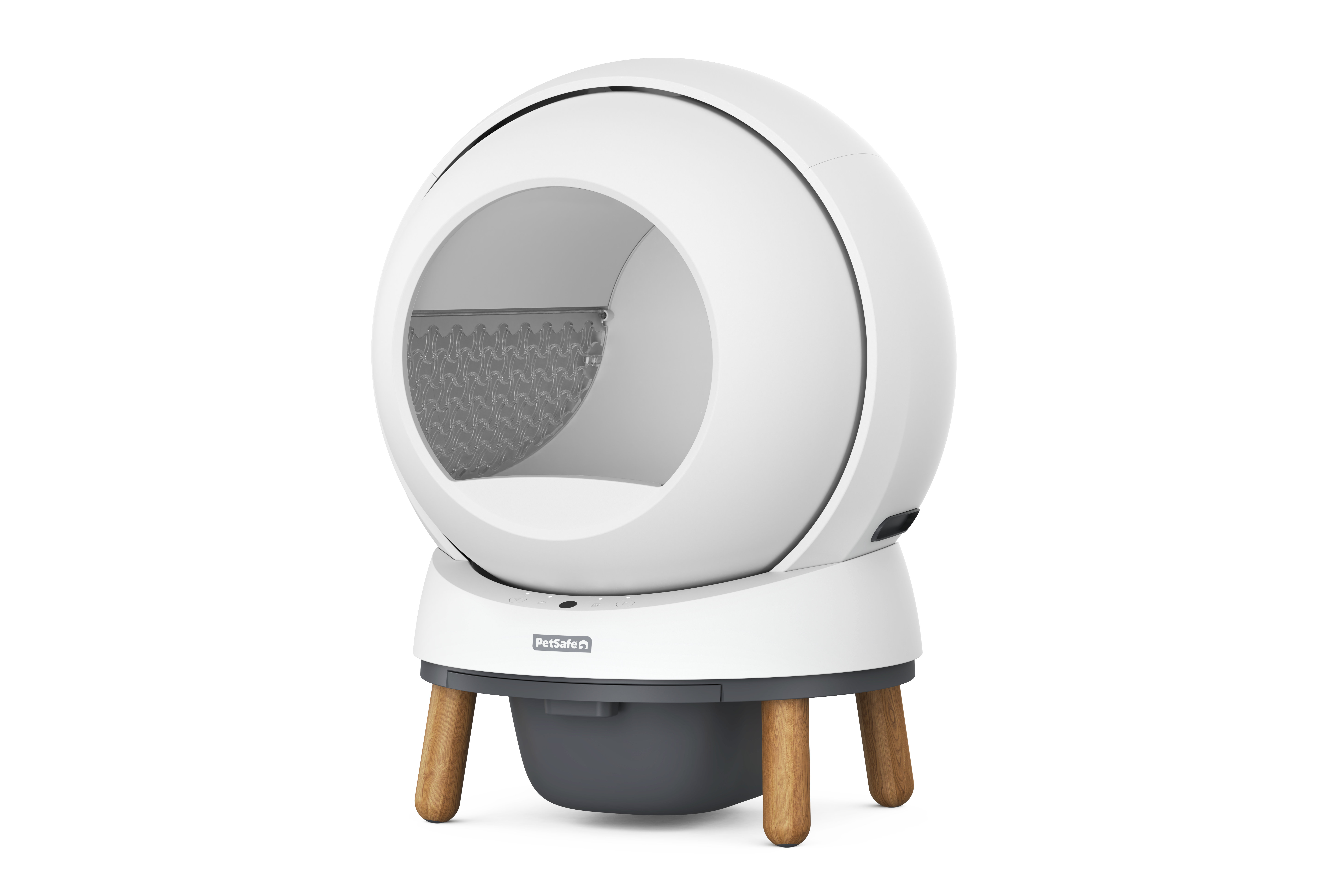
Why it stands out: SmartSpin focuses on the essentials: automatic sifting, a sealed and deodorized waste drawer, weight and usage records, and child-lock controls. PetSafe says it supports cats up to 25 pounds and recommends premium clumping litter, making the transition simpler for households already using a common clumping formula.
The catch: Its 6-liter waste drawer is notably smaller than the 11-liter-class open-top models. PetSafe’s “up to two weeks” language is a best-case manufacturer estimate, not a reliable schedule for every household. A two-cat home should expect to check the drawer much sooner. The app uses 2.4 GHz Wi-Fi, and there is no camera for visually confirming which cat entered.
- Choose it if: you want weight and visit tracking but do not want a camera in your home, and you prefer broad clumping-litter compatibility.
- Skip it if: you need video-based cat identification, have a very large cat, or want the longest possible interval between drawer changes.
- Maintenance reality: PetSafe emphasizes a smooth interior and simple disassembly, but you still need to wipe the chamber, refill litter, change liners, and replace deodorizers.
PETKIT Purobot Max Pro 2: best for camera context in a smaller enclosed opening
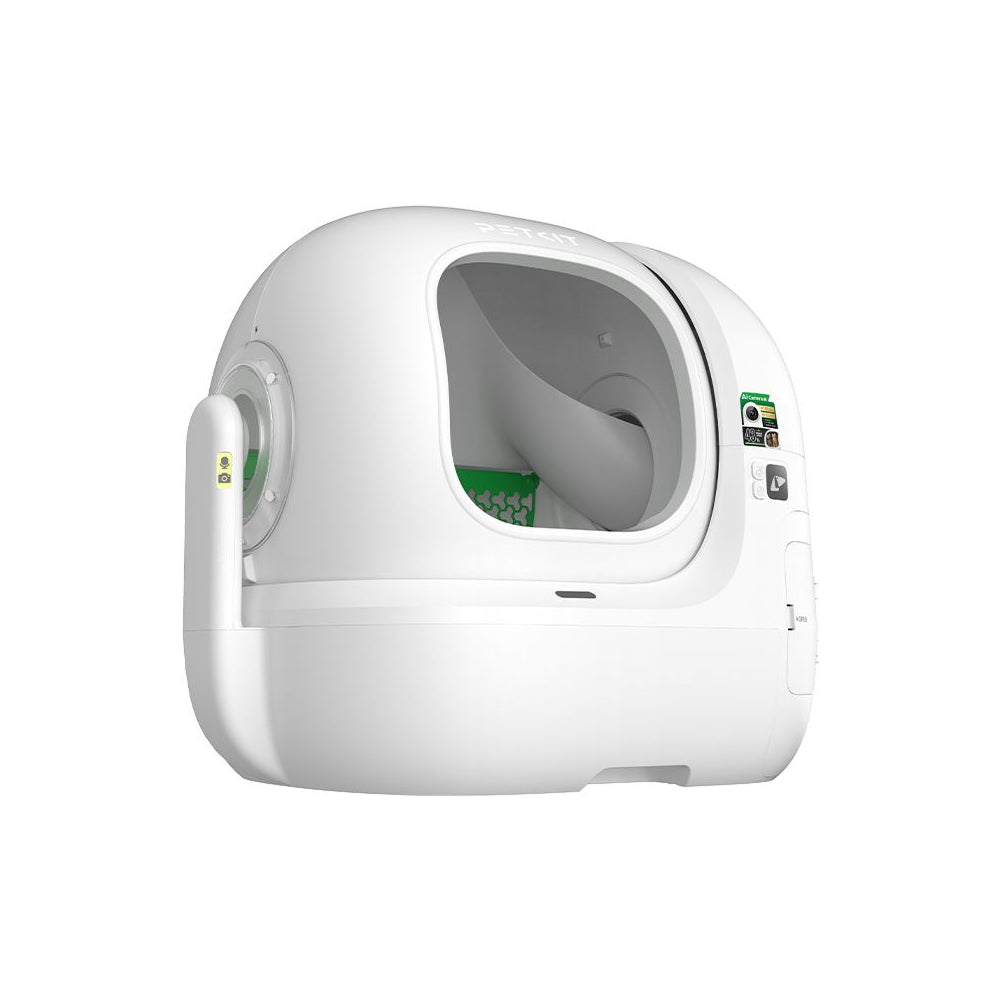
Why it stands out: PETKIT’s 1080p, 210-degree camera can recognize multiple cats and pair a visit with weight and waste context. The 76-liter internal space is generous relative to the shell, while the 8-liter waste bin sits between PetSafe and the larger open-top models. It supports clumping clay, tofu, and mixed litter within published particle limits.
The catch: The 10.51 × 10.74-inch opening is the smallest specified opening in this comparison, and the weight range tops out at 22 pounds. A cat may be under the weight limit yet still feel cramped. PETKIT Care+ is required for 30-day video history, so compare what remains available on the free tier before buying for long-term health records.
- Choose it if: your cat fits comfortably through the opening and you value visual visit records more than an open top.
- Skip it if: your cat is broad, over 22 pounds, mobility-limited, or strongly prefers uncovered boxes.
- Maintenance reality: the camera lens and sensors become additional surfaces to keep clear; litter dust can reduce useful video and sensing even when the drum still cycles.
Best choice by real-life scenario
| Your situation | Start with | Why | Check before buying |
|---|---|---|---|
| Large, long-bodied cat | Neakasa M1 Plus; then Litter-Robot 5 Pro | Higher weight ceiling and/or wider access | Measure entry height and turning room; add a stable step if appropriate |
| Senior or short-legged cat | Petlibro Luma with included step; compare PetSafe | Access support matters more than app features | Observe whether your cat can enter without jumping; keep a low traditional box available |
| Cat refuses covered boxes | Petlibro Luma or Neakasa M1 Plus | Open sight lines and less cave-like enclosure | Luma’s 22-lb cap; M1 Plus entry height |
| Two or more cats with similar weights | Camera model: Litter-Robot 5 Pro, Luma, or Purobot Max Pro 2 | Weight alone may not identify similar-sized cats reliably | Free versus paid recognition/history features |
| No camera wanted | PetSafe SmartSpin | Weight and visit data without video | 2.4 GHz Wi-Fi and smaller drawer capacity |
| Tofu litter household | Luma or Purobot Max Pro 2 | Explicit support with the correct filter/particle size | Pellet dimensions and clumping quality |
| Frequent soft stool or high urination | Do not choose by automation alone | Smearing and seams can create more cleaning, not less | Ease of disassembly, washable parts, and veterinary care for persistent changes |
| Very young kitten | Traditional box for now | Small cats may not trigger sensors reliably | Maker’s minimum age/weight; use manual mode if the maker permits |
Safety rules we would not compromise on
- Respect minimum weight and age. Weight sensors are part of the safety system. Do not assume a light kitten will be detected because an adult cat is.
- Start in manual mode. Let the cat explore the stationary box for several days. Run a cycle only when the cat is away and gradually introduce the sound and motion.
- Keep the old box available. Removing it too early can lead to avoidance and house-soiling. Wait for repeated, relaxed use of the new box.
- Use a firm, level floor. Carpet, wobbling platforms, and uneven tile can undermine weight readings and stability.
- Inspect, do not blindly trust alerts. Check the drawer, interior, sensors, and actual litter surface every day during the first weeks.
- Keep a manual backup. Power, Wi-Fi, apps, motors, and sensors can fail. Every home needs a usable non-powered litter box during outages or repairs.
The ownership costs buyers often miss
Purchase price is only one line in the budget. Before choosing, list the required liners, carbon filters or deodorizer packs, replacement mats or screens, compatible litter, optional ramps, extended warranty, and app subscription. Then ask whether generic liners are allowed and whether losing paid video history would remove the feature you care about most. We intentionally do not show live prices here because retail prices, bundles, and subscriptions change frequently.
Also value your time. A machine with a removable drum may be easier to wash but heavier to carry. A large drawer needs fewer trips to the trash but becomes heavier when full. A camera adds useful context but also creates a lens to dust and a privacy setting to manage. The right choice minimizes the particular work your household finds difficult—not necessarily the total number of chores.
A low-stress seven-day transition plan
- Day 1: place the automatic box beside the current box, powered off, with the cat’s familiar compatible litter.
- Days 2–3: add a small amount of used litter for scent familiarity. Reward voluntary investigation; never place or trap the cat inside.
- Days 3–4: when the cat is in another room, run one manual cycle. Let the cat observe from a safe distance if curious.
- Days 4–6: continue manual cycles after confirmed use. Check for hesitation, rushing, vocalizing, or elimination elsewhere.
- Day 7 and beyond: enable delayed automatic cycling only if the cat is relaxed and the model’s weight/age rules are met. Keep the traditional box until use is consistent.
How we researched this comparison
This is a research-based review, not a hands-on test. Fupaw has not physically tested these five units and has not assigned numeric scores. We compared manufacturer manuals and specification pages, return and warranty information where available, litter and cat-size restrictions, physical access, consumables, app tiers, and recurring maintenance. We also reviewed prominent current comparison pages to identify common buyer questions and gaps, then built this guide around decisions those short rankings often compress: body fit, step height, litter transition, cleaning failure modes, multi-cat identification, and subscription dependency.
Manufacturer capacity and odor-control statements are reported as claims, not independent findings. “Up to” drawer durations depend on the number of cats, urine and stool volume, litter, humidity, and how full you allow the drawer to become. Smart-box records can flag a change, but they do not replace examination by a veterinarian.
Notable alternatives that were not main picks
- Litter-Robot 4: still worth comparing if you want Whisker’s established rotating design and do not need the 5 Pro’s dual-camera features. Check the current price difference before paying for newer monitoring hardware.
- PETKIT PuraMax 2: a relevant alternative for buyers who prioritize a lower entrance, odor containment, and app control over an integrated camera. Deep-cleaning access and hard-floor placement still deserve close attention.
- Rake-style and crystal-tray boxes: often cost less up front, but proprietary trays, crystal litter preferences, rake jams, and recurring supply costs can change the long-term value calculation.
- Unknown marketplace brands: we would not recommend a rotating unit unless the seller provides a model-specific manual, clear minimum-weight rules, accessible support, replacement parts, and a credible return path.
These exclusions are not declarations that a product is unsafe or poor. They clarify the scope of this five-model comparison and show what a buyer should investigate before treating any ranking as universal.
Frequently asked questions
Are automatic litter boxes safe for kittens?
Not in automatic mode unless the specific manufacturer says the kitten meets its minimum age and weight. For example, Petlibro tells owners to disable auto cleaning for kittens under six months or cats under 2.2 pounds. A traditional box is the safest default while a kitten is too light for reliable detection.
Can one automatic box serve multiple cats?
It can reduce scooping, but it may not meet every cat’s social and behavioral needs. Multi-cat households should provide enough toileting options and watch for blocking, guarding, or avoidance. A camera can help identify users when weights are similar, but identification is not guaranteed.
Which design is best for a large cat?
Start with the Neakasa M1 Plus for its open top and roughly 33-pound limit, then compare the Litter-Robot 5 Pro’s 30-pound limit and larger enclosed opening. Weight alone is insufficient: measure shoulder width, body length, turning behavior, and step comfort.
Do automatic litter boxes really control odor?
Fast waste separation and a sealed drawer can reduce exposed odor, but no machine eliminates it. Drawer seals, litter, ventilation, stool quality, cleaning frequency, and deodorizer replacement all matter. Marketing comparisons are usually performed under controlled conditions and may not match your home.
What happens if the power or Wi-Fi goes out?
Most units still contain litter but cannot complete normal smart functions without power, and remote alerts require connectivity. Keep a traditional litter box ready. Never leave a cat dependent on a single powered box during travel without an in-person caregiver checking it.
Are self-cleaning litter boxes worth it?
They can be worth it when daily scooping is the main problem and the cat accepts the enclosure, entrance, motion, and compatible litter. They are poor value when the cat refuses the box, the machine does not fit the room, or the owner expects zero maintenance. Judge value by chores removed, recurring supplies, deep-cleaning time, return policy, and whether a backup box is still required.
Which automatic litter box is easiest to clean?
There is no universal winner because “easy” depends on where the mess collects. Look for a removable drum or globe, smooth urine-contact surfaces, an accessible sifting screen, a drawer that can be removed without spilling, and parts that fit your sink or shower. A large waste bin reduces emptying frequency but can become heavier and more awkward to carry.
Sources and specification checks
- Whisker: Litter-Robot 5 Pro product specifications and Litter-Robot 5 manual
- Petlibro: Luma specifications, compatibility, safety, and subscription details
- Neakasa: M1 Plus product specifications
- PetSafe: ScoopFree SmartSpin specifications and maintenance guidance
- PETKIT: Purobot Max Pro 2 specifications and app features
- Comparison context reviewed: Cats.com, AutoLitterBox UK, CNN Underscored, WIRED, and WebVet. Their rankings and test claims were not copied or treated as Fupaw testing.
Update note: Research-based comparison updated October 6, 2026. Recheck model availability, manuals, app plans, and Amazon destinations whenever this guide is materially updated.